
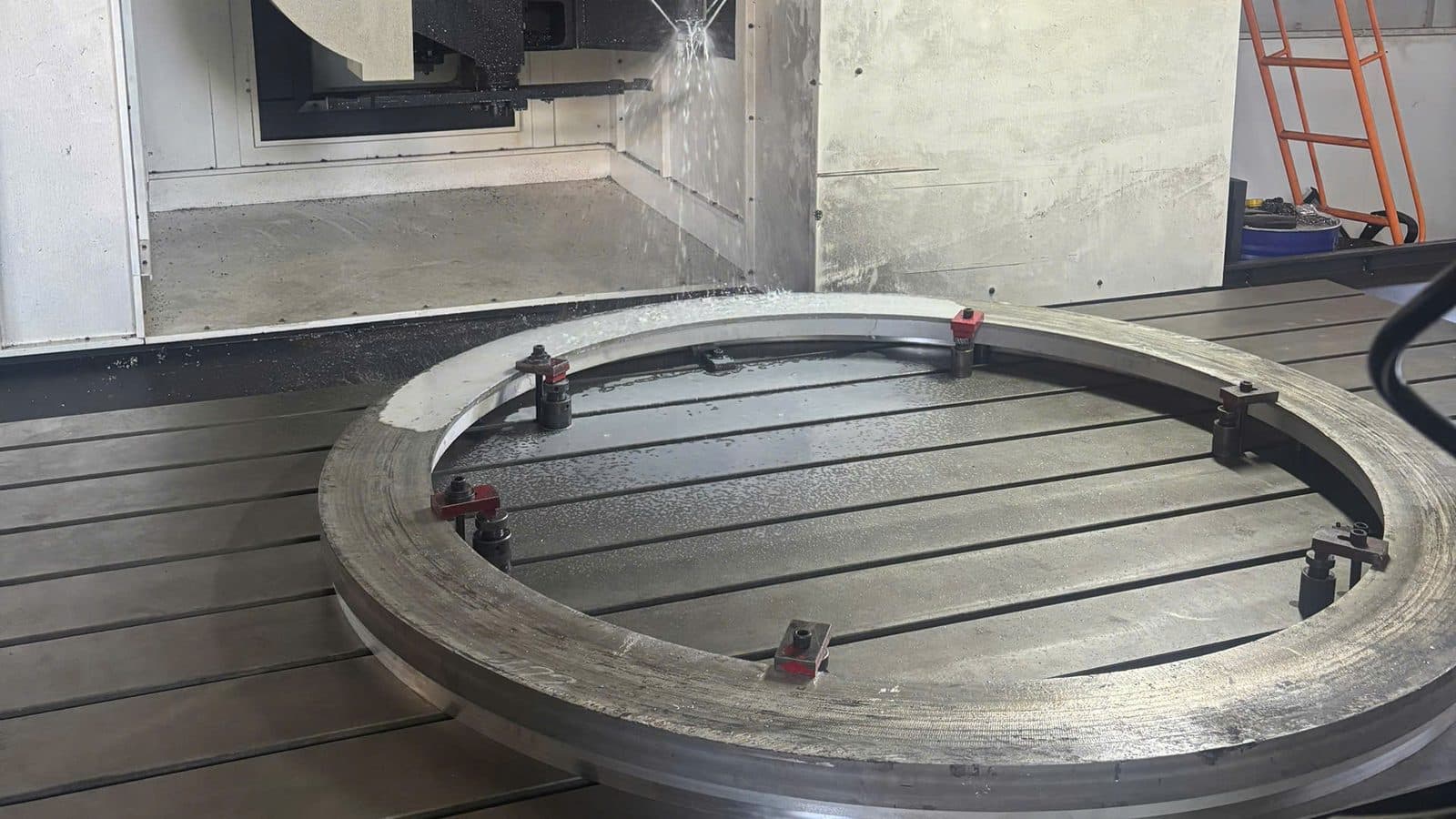
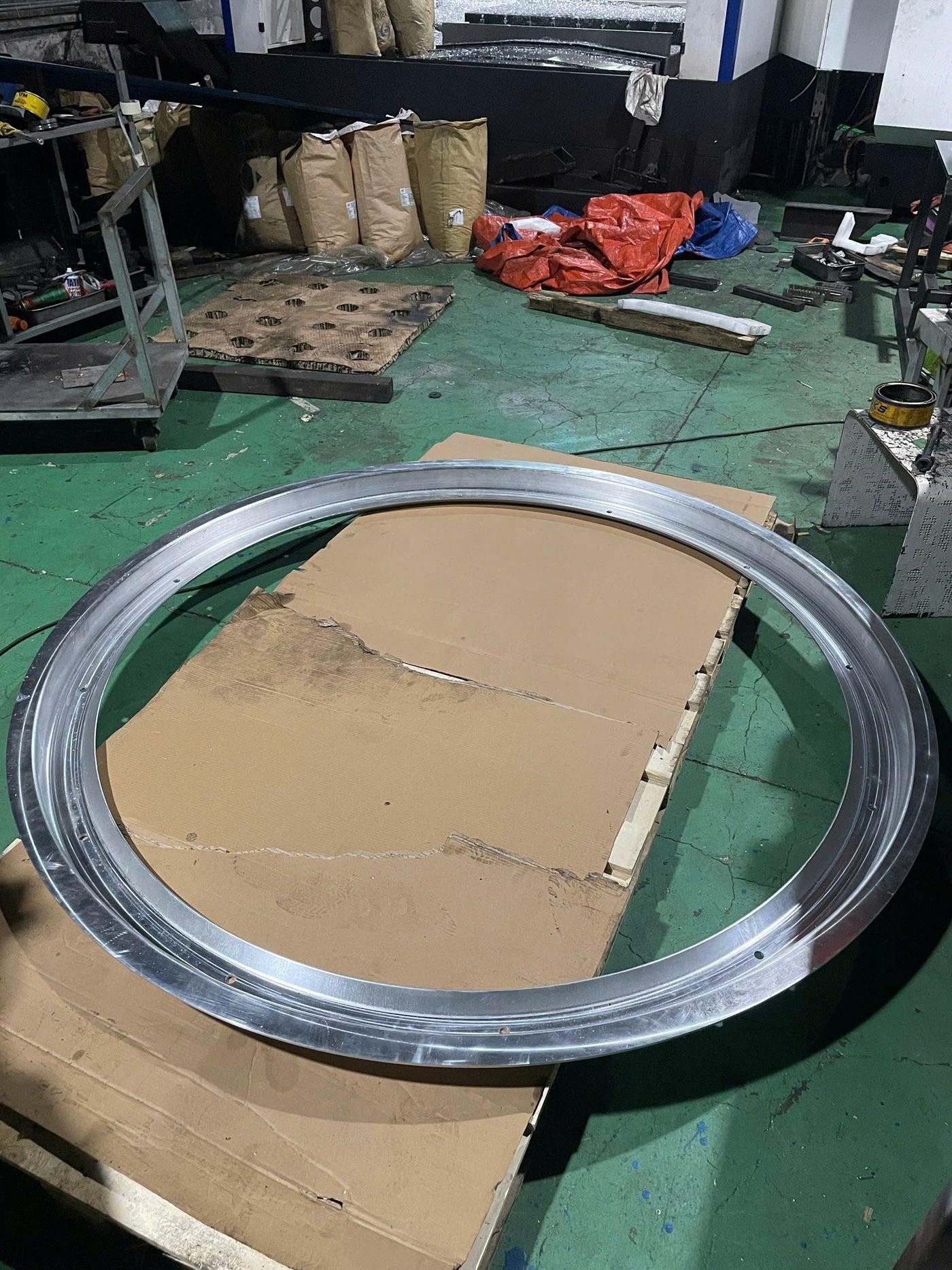
Z Robotics has finished machining an aluminium ring for a Japanese client: a casting of about 340–345 kg per piece was shipped from Japan to our workshop in Di An, cut down to 22.5 kg, then packed and shipped back to Japan. The ring is nearly 2 m across with walls only 6 mm thick, so the hard part was not removing material but keeping the ring free of distortion to Japanese standards. It is a representative large-format CNC milling project for us.
| Item | Detail |
|---|---|
| Material | Grade 5052 aluminium, cast stock |
| Stock | Cast in Japan, about 340–345 kg per piece |
| Finished part | 22.5 kg per piece |
| Material removed | About 320 kg, or over 93% of the casting |
| Size | 1,995 mm outer diameter, 6 mm wall |
| Requirement | Distortion control to Japanese standards |
| Route | Japan → Di An workshop → packing → Japan |
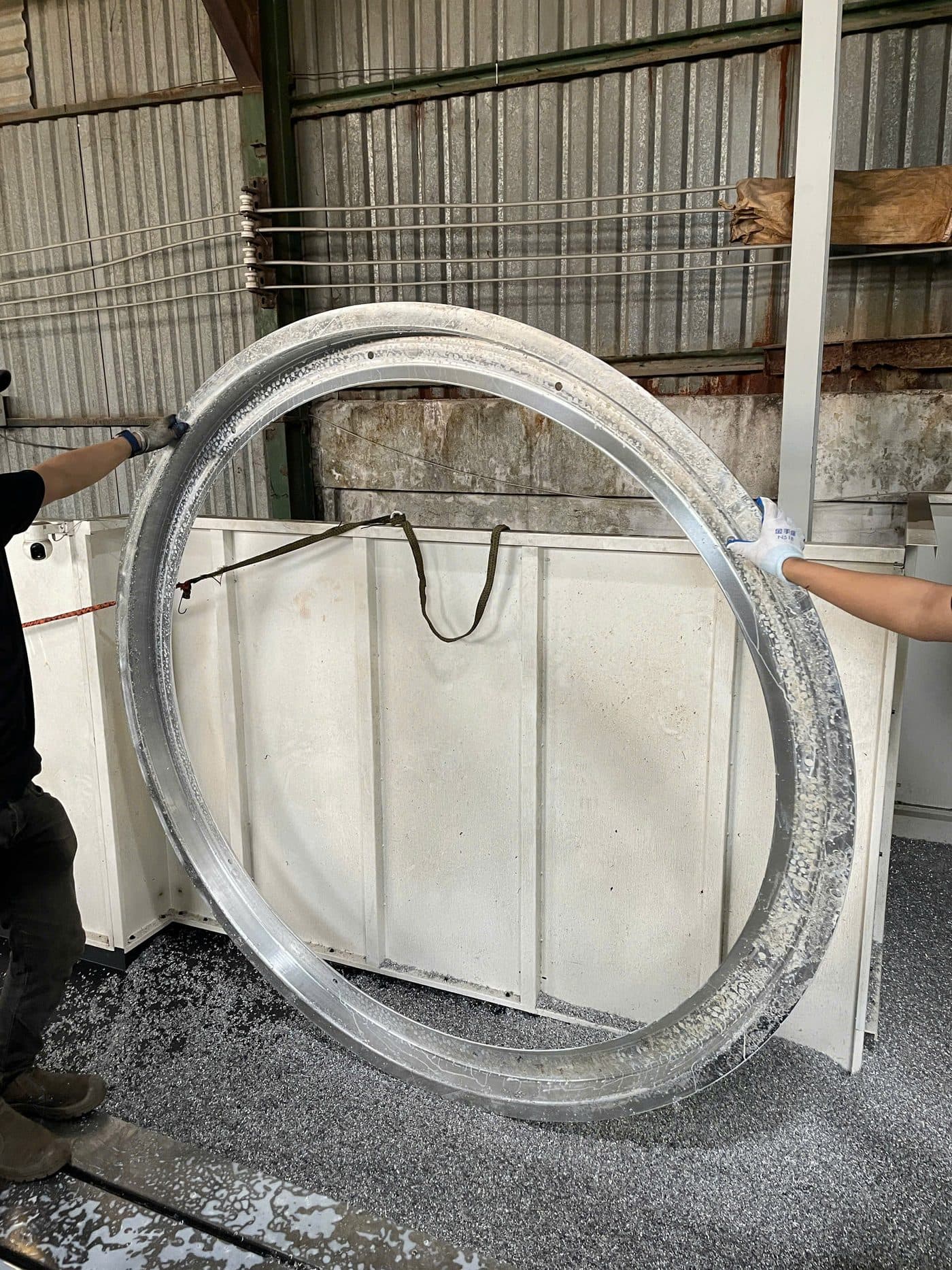
Why a thin-walled aluminium ring distorts so easily
The diameter is more than 300 times the wall thickness, so the ring loses its shape easily once it is thin. Three risks act at once.
First, residual stress. A casting carries internal stress, and removing over 93% of its mass releases most of it, so the ring changes shape during machining.
Second, force. The ring gets softer as work proceeds: clamping, cutting and even its own weight can deform it. A ring forced by its clamps can measure correctly on the machine, then spring back once released.
Third, heat. Aluminium expands about 23 µm/m per degree C, so a 2 m ring warming by 5 °C grows about 0.23 mm in diameter by calculation. Every measurement therefore has to be tied to its temperature.
The casting also comes from Japan, so the process has to be right the first time.
How we controlled distortion
The work was split into stages rather than cut straight to size, giving the ring a chance to settle before the final pass:
1. Rough both faces, turning the part over so material comes off evenly rather than all from one side.
2. Stress-relieving heat treatment between roughing and finishing, so remaining stress does not distort the ring in later stages.
3. Semi-finish, then release every clamp so the ring returns to its free state and rests on the machine before finishing.
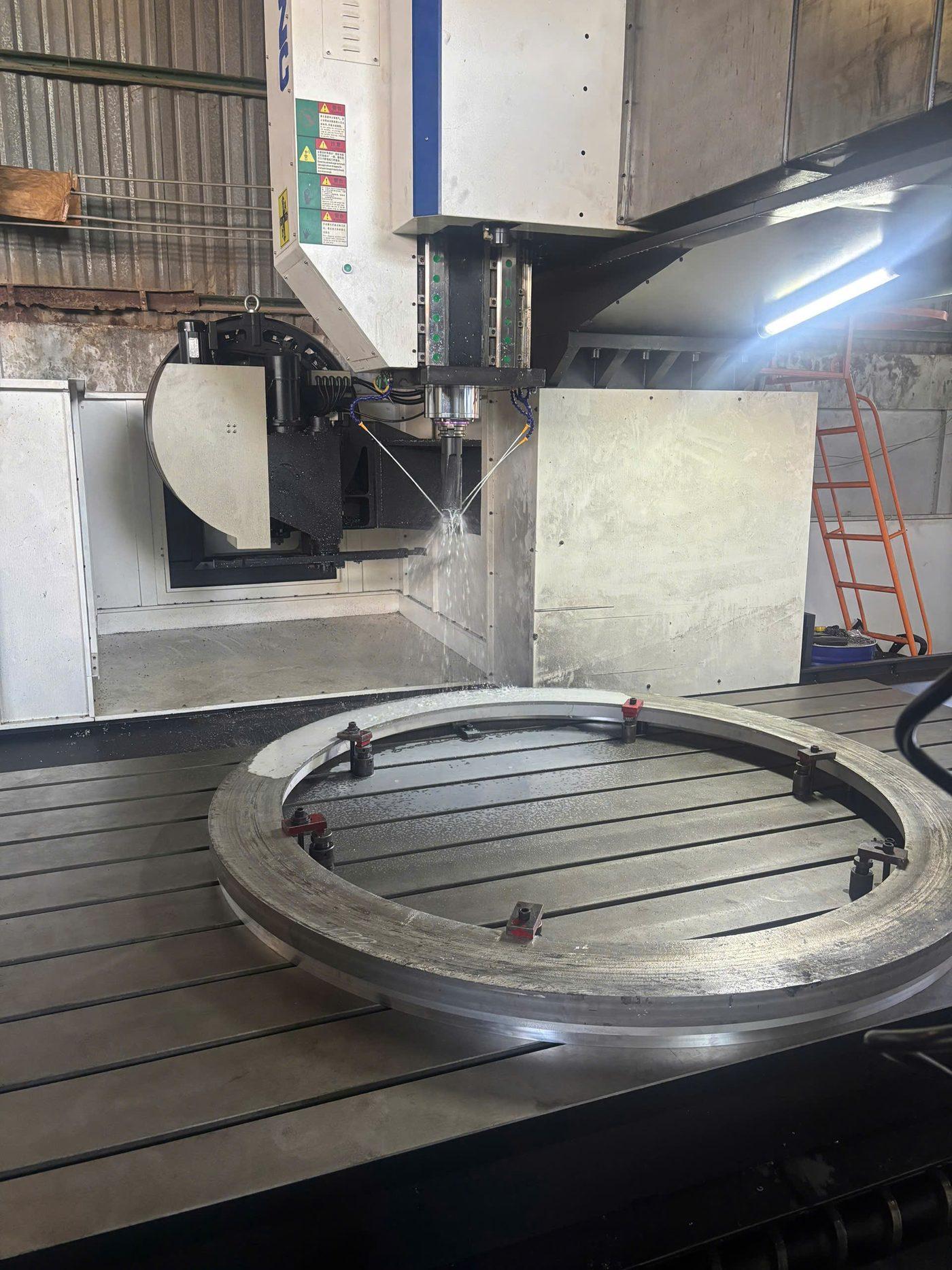
4. Support rather than force: many clamping points spaced evenly around the circumference, with supports and wedges under the thin sections, so forces do not deform the ring.
5. After each turnover, probe a machined diameter to find the centre again rather than trusting the setup position.
6. When measuring the large diameter, allow for the difference in thermal expansion between aluminium and a steel gauge.
The general principles behind these steps are explained further in milling long parts: distortion and fixturing.
From Di An back to Japan
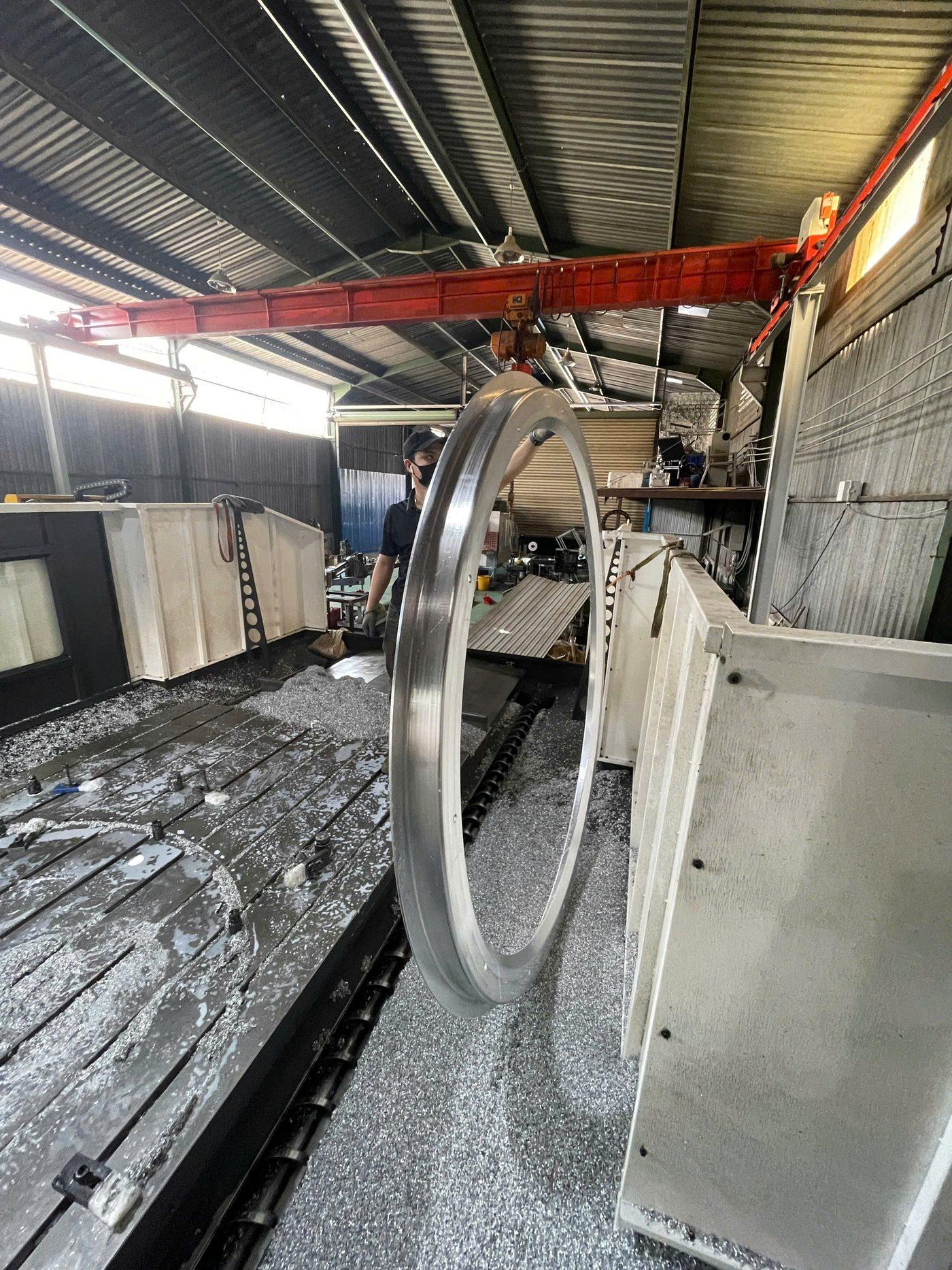
The ring weighs only 22.5 kg but is nearly 2 m across, so handling and packing are part of controlling distortion too. In the workshop it was moved by hoist. Once finished, it was packed and shipped to the client in Japan.
Machining capability for Japanese clients
This project shows Z Robotics can receive stock from Japan, machine it to a Japanese client's requirements and deliver the finished part back to Japan. The workshop runs a WP4028 gantry mill with X 4,400 × Y 2,800 × Z 1,500 mm of travel, enough for parts nearly 2 m across. If your company is looking for a large-format machining partner in Vietnam for difficult parts, we are ready to review your drawings.
Frequently asked questions
Does Z Robotics machine parts for Japanese clients? — Yes. The ring in this article was made for a Japanese client, with stock from Japan and the finished part shipped back to Japan.
Do you machine castings shipped from abroad? — Yes. In this project the stock was cast in Japan and shipped to our Di An workshop for machining.
Why might thin-walled aluminium parts need heat treatment partway through? — Removing a lot of material releases residual stress. Stress relief between roughing and finishing keeps what remains from bending the part in the final stages.
What should I send for a quote on a similar part? — 2D drawings or a 3D model, material and stock condition, quantity, the tolerance standard that applies, and packing and shipping requirements.
Have a difficult part to machine? Send your drawing for a quote.
Contact Z Robotics
We would be delighted to accompany you in your mechanical machining and automation projects. For consultation, please contact us:
🏢 Head office: 118/137 Phan Huy Ich Street, Tan Son Ward, Ho Chi Minh City
📍 Business location: 335 DT743B Street, Dong Tac, Di An, Ho Chi Minh City
📞 Phone: Mr. Thanh — 0973 040 871